
I wanted pancakes that were fluffy, tender and actually stayed in one piece. After too many batches that broke at the flip, this is the gluten free pancake recipe I trust on busy mornings and lazy weekends alike.
They’re soft inside, golden at the edges and hold together on the spatula. No crumble, no grit, just pancakes that behave like the ones you remember.
Why These Gluten Free Pancakes Don’t Crumble
Gluten free batters need a few helpers to stay cohesive. This recipe uses a balanced flour blend plus a little almond flour for tenderness and structure, and a touch of starch for crisp edges that protect the soft center. Buttermilk and yogurt add moisture and gentle acidity so baking powder and soda lift the batter without making it dry.
The other make-or-break is technique. A short 10-minute batter rest hydrates the flours so they set as a unified cake, not sandy bits. Cooking on medium heat gives you time to see bubbles form and edges look matte before flipping, which is your cue for a clean turn.
If you’re new to gluten free breakfasts, these pancakes play well with other smart habits. For more tips on staying full and satisfied, this guide to common gluten free breakfast mistakes is a helpful read. And if cross-contact is a concern in your kitchen, review the cross-contamination mistakes that ruin a gluten free breakfast so your pancakes stay safe.
What You’ll Need
A sturdy blend, enough moisture and the right leavening make all the difference. Here are the ingredients that create fluffy pancakes that hold together.
- 1 cup gluten free all-purpose flour blend, with xanthan gum
- 1/2 cup almond flour, finely ground
- 2 tbsp cornstarch, or tapioca starch
- 2 tbsp granulated sugar
- 2 tsp baking powder, gluten free
- 1/4 tsp baking soda
- 1/2 tsp fine sea salt
- 1 cup buttermilk, room temperature
- 1/2 cup plain yogurt, Greek or regular; room temperature
- 2 large eggs, room temperature
- 2 tbsp unsalted butter, melted and cooled; or neutral oil
- 1 tsp vanilla extract
- butter or oil for the pan
- 1/2-2/3 cup add-ins like blueberries or chocolate chips, optional
Step-by-Step: Pancakes That Hold Together
Follow these simple steps and watch for the doneness cues for clean flips and soft, stackable pancakes.
- Preheat a griddle to 375°F (190°C) or heat a large nonstick skillet over medium heat. Lightly grease with butter or oil.
- In a large bowl, whisk the gluten free flour blend, almond flour, cornstarch, sugar, baking powder, baking soda and salt until well combined.
- In a separate bowl, whisk the buttermilk, yogurt, eggs, melted butter and vanilla until smooth.
- Pour the wet ingredients into the dry and stir with a spatula until just combined. The batter should be thick but pourable with small lumps.
- Let the batter rest for 10 minutes to fully hydrate. If it thickens too much, stir in 1 to 3 tablespoons milk to loosen.
- For each pancake, pour about 1/4 cup batter onto the hot surface. If using add-ins, sprinkle them evenly over the wet batter in the pan.
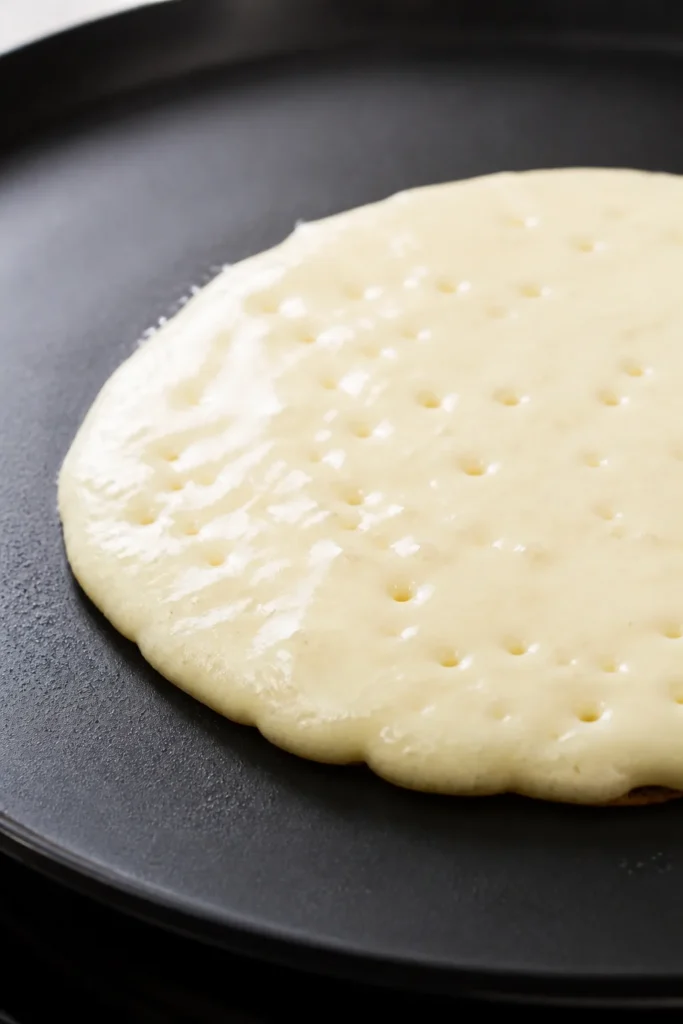
- Cook until bubbles form across the top and the edges look matte, 2 to 3 minutes. Flip gently and cook until the underside is golden and the center feels set, 1 to 2 minutes more.
- Transfer to a wire rack or a 200°F (95°C) oven to keep warm while you cook the remaining batter, greasing the pan between batches as needed.
Make-Ahead, Storage and Reheating
Let cooked pancakes cool completely on a wire rack so steam doesn’t make them soggy. Store in an airtight container in the fridge for up to 4 days. For longer storage, freeze in a single layer, then stack with parchment and keep in a freezer bag for up to 2 months.
Reheat from chilled in a 300°F (150°C) oven for 8 to 10 minutes or in a dry skillet over medium heat for 1 to 2 minutes per side. From frozen, pop them in the toaster or air fryer at 320°F (160°C) until warmed through and lightly crisp at the edges. The structure holds up nicely to reheating.
Doing a bigger breakfast prep? Pair a batch of these with ideas from Gluten Free Breakfast Meal Prep: 5 Days in 40 Minutes so weekday mornings feel easy.
Mistakes That Cause Crumbly Pancakes
- Using a flour blend without binders: Choose a gluten free all-purpose blend that includes xanthan gum or add 1/4 teaspoon yourself so the pancakes don’t break.
- Skipping the batter rest: Hydration takes time. Resting 10 minutes lets the flour absorb liquid and creates a cohesive, scoopable batter.
- Cooking too hot: High heat scorches the outside while the center stays unset, which makes pancakes tear. Medium heat gives an even set.
- Flipping too early: Wait for bubbles across the surface and mattified edges before flipping. That visual cue is your built-in timer.
- Overmixing the wet into the dry: Stir until just combined. A few small lumps are fine and actually help tenderness.
Easy Variations and Smart Substitutions
- Dairy-free: Use unsweetened almond milk mixed with 2 teaspoons lemon juice in place of buttermilk, and coconut yogurt or a thick dairy-free yogurt for the yogurt. Swap melted butter with light olive oil.
- No almond flour: Replace with 1/3 cup additional gluten free flour blend plus 2 tablespoons finely ground oat flour, certified gluten free.
- Higher protein: Stir in 1 scoop unflavored or vanilla whey or plant protein and add 2 to 4 tablespoons extra milk to maintain a pourable batter. For more ideas, see high-protein gluten free breakfast ideas.
- Blueberry or chocolate chip: Sprinkle 1/3 cup berries or chips over each pancake right after pouring the batter into the pan so they don’t sink or scorch.
- Whole-grain vibe: Swap 1/4 cup of the blend for certified gluten free buckwheat flour for a toasty flavor that still holds together.
What To Serve With These Pancakes
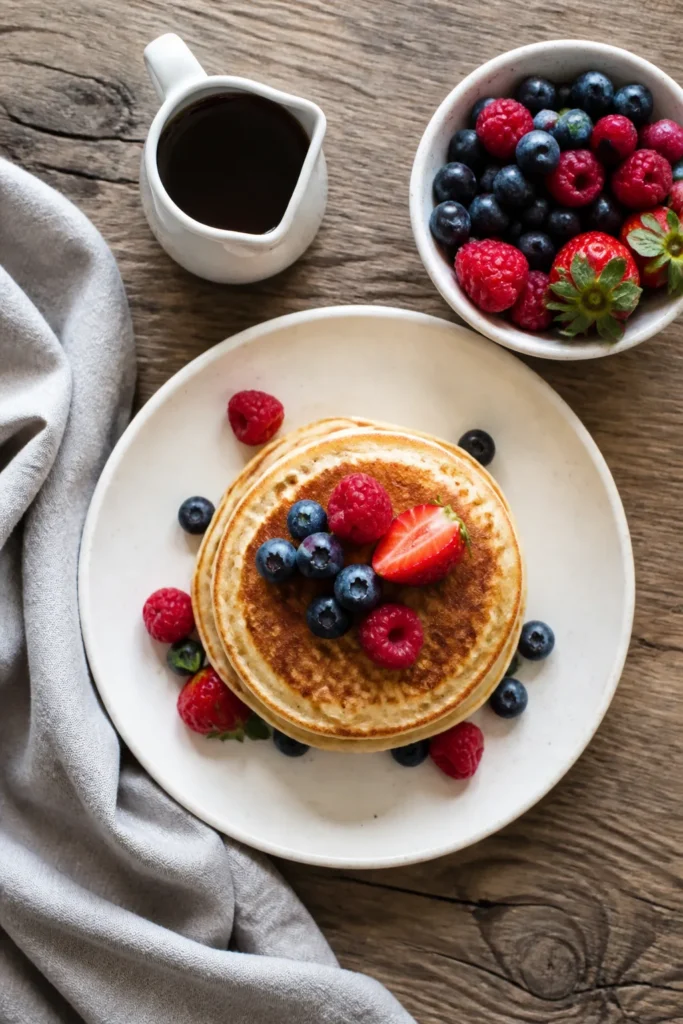
We like warm maple syrup, a pat of butter and fresh berries. For a savory balance, add crispy bacon or sausage and a side of scrambled eggs. If you want a bread basket vibe for a crowd, these gluten free breakfast rolls that actually rise are a great partner on the table.
For quick mornings, pair a reheated stack with a blender drink from gluten free breakfast smoothies and head out the door satisfied.
Your Questions, Answered
Can I use a single flour, like rice flour, instead of a blend?
A single flour tends to be gritty or fragile. A gluten free all-purpose blend that includes rice flour, starches and a binder like xanthan gives better texture and structure. If you only have rice flour, add tapioca or cornstarch for tenderness and a small amount of xanthan gum.
How do I know when to flip gluten free pancakes?
Watch for steady bubbles across the surface, especially toward the center, and edges that lose their wet shine. Slide your spatula under the pancake; if it lifts in one piece without bending too much, it’s ready. This is usually 2 to 3 minutes on medium heat.
Why is my batter too thick or too thin?
Flour blends vary in absorbency. After the 10-minute rest, adjust with 1 to 3 tablespoons milk if it’s too thick, or 1 to 2 teaspoons flour blend if it’s runny. Aim for a thick but pourable batter that slowly ribbons off a spoon.
Can I make the batter the night before?
Yes, but reduce the baking powder by 1/2 teaspoon and add 1/4 teaspoon just before cooking to refresh lift. Store the batter covered in the fridge. The texture will thicken overnight, so loosen with a splash of milk in the morning.
What’s the best pan temperature?
A griddle at 375°F (190°C) or a skillet over medium heat works well. Test with a small spoonful of batter: it should sizzle gently and form bubbles within a minute without smoking. Too hot leads to scorched outsides and crumbly flips.
A Warm Finish
I hope these pancakes find a spot in your weekend rotation. They’re simple to mix, easy to flip and the stack holds together from skillet to plate. If you make them, leave a note with your favorite add-ins so we can all try something new next time.

Gluten Free Breakfast Pancakes That Don’t Crumble
Fluffy, golden gluten free pancakes that hold together. A balanced flour blend, a little almond flour and a short batter rest make clean flips easy.
Ingredients
Instructions
- Preheat a griddle to 375°F (190°C) or heat a large nonstick skillet over medium heat. Lightly grease with butter or oil.
- In a large bowl, whisk the gluten free flour blend, almond flour, cornstarch, sugar, baking powder, baking soda and salt until well combined.
- In a separate bowl, whisk the buttermilk, yogurt, eggs, melted butter and vanilla until smooth.
- Pour the wet ingredients into the dry and stir with a spatula until just combined. The batter should be thick but pourable with small lumps.
- Let the batter rest for 10 minutes to fully hydrate. If it thickens too much, stir in 1 to 3 tablespoons milk to loosen.
- For each pancake, pour about 1/4 cup batter onto the hot surface. If using add-ins, sprinkle them evenly over the wet batter in the pan.
- Cook until bubbles form across the top and the edges look matte, 2 to 3 minutes. Flip gently and cook until the underside is golden and the center feels set, 1 to 2 minutes more.
- Transfer to a wire rack or a 200°F (95°C) oven to keep warm while you cook the remaining batter, greasing the pan between batches as needed.
Notes
- For ultra-even browning, wipe the skillet with a folded paper towel between batches to remove excess butter.
- Use a thin, wide spatula for easy flips and slide it fully under the pancake before turning.
- If your blend does not contain xanthan gum, add 1/4 teaspoon to the dry ingredients for better structure.
Leave a Reply