
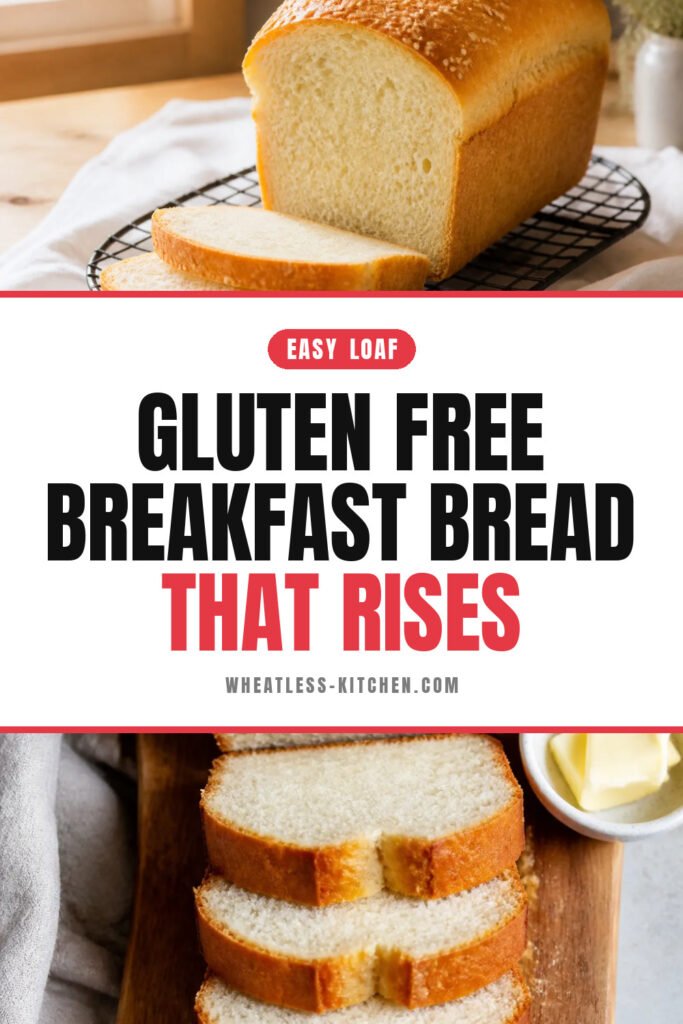
I wanted a gluten free breakfast bread that behaved like the toast I grew up with: tall, soft, sliceable, and not crumbly. It took me three tries to get the lift and texture right, and now this loaf rises proudly without sinking or turning dense.
The secret is a smart mix of flours, psyllium for structure, and a warm, quick rise. If you’ve been burned by bricks in the past, this one will change your mornings in the best way.
Why This Loaf Finally Rises
This recipe builds structure the way gluten would, using psyllium husk powder to hold moisture and trap gas from the yeast. That means real oven spring instead of a sad slump. We also lean on a balanced mix of a 1:1 gluten free flour blend plus tapioca starch for tenderness and chew.
The dough is a thick batter, not a kneadable ball, which lets it hydrate fully and rise fast. A little honey feeds the yeast, warm milk keeps it cozy, and a touch of apple cider vinegar brightens the flavor and supports lift. You get a high-domed, golden loaf you can actually slice for toast, French toast, or breakfast sandwiches.
What You’ll Need for a Tall, Tender Loaf
Simple pantry items do the heavy lifting here. Use a gluten free flour blend that already contains xanthan gum for the best rise.
- 1 cup warm milk, 105–115°F (40–46°C); use dairy or unsweetened almond/oat milk
- 2 1/4 tsp instant yeast, one standard packet
- 2 tbsp honey
- 2 1/2 cups gluten free all-purpose flour blend, 1:1 blend with xanthan gum
- 1/2 cup tapioca starch
- 1 tbsp psyllium husk powder, not whole husks
- 1 tsp fine salt
- 2 large eggs, room temperature
- 3 tbsp neutral oil, avocado or light olive oil
- 1 tsp apple cider vinegar
- 2-4 tbsp warm water, as needed to adjust batter consistency
- sesame or poppy seeds, optional topping
- oil or butter, for greasing the pan
Step-by-Step: From Bowl to Pan
Follow these straightforward steps and watch the loaf rise right in the pan.
- Grease an 8.5×4.5-inch loaf pan and line the long side with a strip of parchment for easy removal. Preheat the oven to 375°F (190°C) when the dough is nearly risen.
- In a large bowl, whisk warm milk, instant yeast, and honey. Let sit for 5 minutes until the surface looks slightly foamy to show the yeast is active.
- In a separate bowl, whisk the gluten free flour blend, tapioca starch, psyllium husk powder, and salt until evenly combined.
- Add the dry ingredients to the yeast mixture. Beat in the eggs, oil, and apple cider vinegar with a sturdy spatula or hand mixer on low until a thick, smooth batter forms, 1 to 2 minutes.
- Assess the batter: it should be like thick cake batter, not a stiff dough. If it seems too thick to spread, beat in 2 to 4 tablespoons warm water, 1 tablespoon at a time, until smooth and heavy but spreadable.
- Scrape the batter into the prepared pan and smooth the top with a damp spatula, mounding it slightly in the center. Sprinkle seeds on top if using.
- Proof in a warm, draft-free spot until the loaf rises about 1 inch above the rim, 30 to 45 minutes depending on room temperature. It should look domed and gently spring back when tapped.
- Bake at 375°F (190°C) for 35 to 40 minutes until deep golden and the center reaches about 205°F (96°C) on an instant-read thermometer. If the top browns too fast, tent loosely with foil for the last 10 minutes.
- Cool in the pan for 10 minutes, then lift out using the parchment and transfer to a rack. Cool at least 1 hour before slicing so the crumb sets and slices cleanly.
- Slice, toast if you like, and store leftovers as directed. Enjoy for toast, French toast, or breakfast sandwiches.

Storage, Make-Ahead, and Reheating
Let the loaf cool completely, then store slices in an airtight bag at room temperature for 24 hours. For longer storage, refrigerate up to 4 days or freeze up to 2 months with parchment between slices so you can pull out just what you need.
Toast slices straight from the fridge or freezer. If you prefer a soft slice, warm in a 300°F (150°C) oven for 5 to 7 minutes, wrapped in foil to keep moisture in. For meal prep fans, slice the whole loaf after it cools and freeze half for next week.
If you like planning ahead, bake the loaf on Sunday and use it for quick breakfasts all week. For more ideas, see make-ahead gluten free breakfasts you can prep on Sunday.
Common Mistakes to Avoid
- Using a flour blend without binders. If your blend doesn’t include xanthan gum, the loaf won’t hold structure. Add 1 teaspoon xanthan gum if needed.
- Water that’s too hot or too cold. Yeast likes 105–115°F (40–46°C). Hotter kills it, colder slows it so much that the bread barely rises.
- Under-hydrating the batter. Gluten free dough should look like thick cake batter, not a firm ball. Dry dough equals a dense loaf.
- Over-proofing. If the dome rises far above the pan and then collapses, you waited too long. Bake when it’s about 1 inch above the rim and jiggles slightly.
- Slicing while warm. It smells amazing, but slicing hot bread compresses the crumb. Cool at least 1 hour for clean slices.

Variations and Easy Substitutions
- Dairy-free: Use unsweetened almond milk or oat milk. The loaf will still rise well and toast beautifully.
- Seeded loaf: Stir 2 tablespoons each of sunflower seeds and pumpkin seeds into the batter, and sprinkle sesame on top before baking.
- Cinnamon raisin: Add 1 teaspoon cinnamon and 3/4 cup raisins. Reduce honey by 1 teaspoon to balance sweetness.
- Whole-grain vibe: Swap 1/4 cup of the flour blend for certified gluten free oat flour for a heartier taste.
- No psyllium on hand: Use 1 tablespoon ground golden flaxseed plus 1/2 teaspoon xanthan gum. Texture will be slightly more tender.
What to Serve With It
Toast and top with peanut butter and sliced banana for a quick breakfast, or make avocado toast with a squeeze of lemon and chili flakes. For a balanced morning, pair a slice with one of these gluten free breakfast smoothies that actually taste good.
It’s sturdy enough for breakfast sandwiches. Try it with eggs and bacon from this guide to gluten free breakfast sandwiches that hold together. If you prefer savory mornings, you’ll like these ideas for a savory gluten free breakfast, too.

Your Questions, Answered
Can I make this gluten free breakfast bread without eggs?
Yes. Replace the 2 eggs with 1/2 cup unsweetened applesauce plus 1 tablespoon ground flaxseed. The loaf will be slightly more tender and a bit less lofty, but it still rises well and toasts nicely.
What gluten free flour blend works best here?
Use a 1:1 all-purpose gluten free blend that includes xanthan gum. Blends with rice flour, potato starch, and sorghum tend to give the best crumb. If yours has no xanthan, add 1 teaspoon xanthan gum to the dry ingredients.
How do I know when the bread is done in the center?
Look for a deep golden top and firm sides, and check the internal temperature with an instant-read thermometer. It should read about 205°F (96°C). If the top browns too fast, tent loosely with foil for the last 10 minutes.
My kitchen is cold. How can I help the dough rise?
Create a warm proofing spot by turning your oven on for 1 minute, then switching it off. Place the pan inside with the door closed. Alternatively, set the pan near a warm appliance; aim for 75–85°F (24–29°C).
Can I bake this in a larger pan?
Yes, you can use a 9×5-inch pan, but the loaf will be a bit shorter. Start checking for doneness 5 minutes earlier, since it may bake slightly faster due to greater surface area.
A Warm Finish
I know the feeling of pulling a short, heavy loaf out of the oven. This recipe has been the most reliable rise in my gluten free kitchen, and I hope it becomes your go-to, too.
Toast a slice, add your favorite topping, and enjoy a tall piece of morning comfort. If you try a variation, tell me what you loved.

Gluten Free Breakfast Bread That Actually Rises
A tall, sliceable gluten free breakfast bread with a soft crumb and golden crust. Real lift from yeast, psyllium, and a smart flour blend.
Ingredients
Instructions
- Grease an 8.5×4.5-inch loaf pan and line the long side with a strip of parchment for easy removal. Preheat the oven to 375°F (190°C) when the dough is nearly risen.
- In a large bowl, whisk warm milk, instant yeast, and honey. Let sit for 5 minutes until the surface looks slightly foamy to show the yeast is active.
- In a separate bowl, whisk the gluten free flour blend, tapioca starch, psyllium husk powder, and salt until evenly combined.
- Add the dry ingredients to the yeast mixture. Beat in the eggs, oil, and apple cider vinegar with a sturdy spatula or hand mixer on low until a thick, smooth batter forms, 1 to 2 minutes.
- Assess the batter: it should be like thick cake batter, not a stiff dough. If it seems too thick to spread, beat in 2 to 4 tablespoons warm water, 1 tablespoon at a time, until smooth and heavy but spreadable.
- Scrape the batter into the prepared pan and smooth the top with a damp spatula, mounding it slightly in the center. Sprinkle seeds on top if using.
- Proof in a warm, draft-free spot until the loaf rises about 1 inch above the rim, 30 to 45 minutes depending on room temperature. It should look domed and gently spring back when tapped.
- Bake at 375°F (190°C) for 35 to 40 minutes until deep golden and the center reaches about 205°F (96°C) on an instant-read thermometer. If the top browns too fast, tent loosely with foil for the last 10 minutes.
- Cool in the pan for 10 minutes, then lift out using the parchment and transfer to a rack. Cool at least 1 hour before slicing so the crumb sets and slices cleanly.
- Slice, toast if you like, and store leftovers as directed. Enjoy for toast, French toast, or breakfast sandwiches.
Notes
- If your flour blend does not contain xanthan gum, add 1 teaspoon xanthan to the dry ingredients.
- For egg-free: replace 2 eggs with 1/2 cup unsweetened applesauce plus 1 tablespoon ground flaxseed.
- Cold kitchen trick: Pre-warm the oven for 1 minute, turn it off, and proof the loaf inside with the door closed.
- For the best slices, use a serrated knife in a gentle sawing motion once the loaf is fully cool.
Leave a Reply